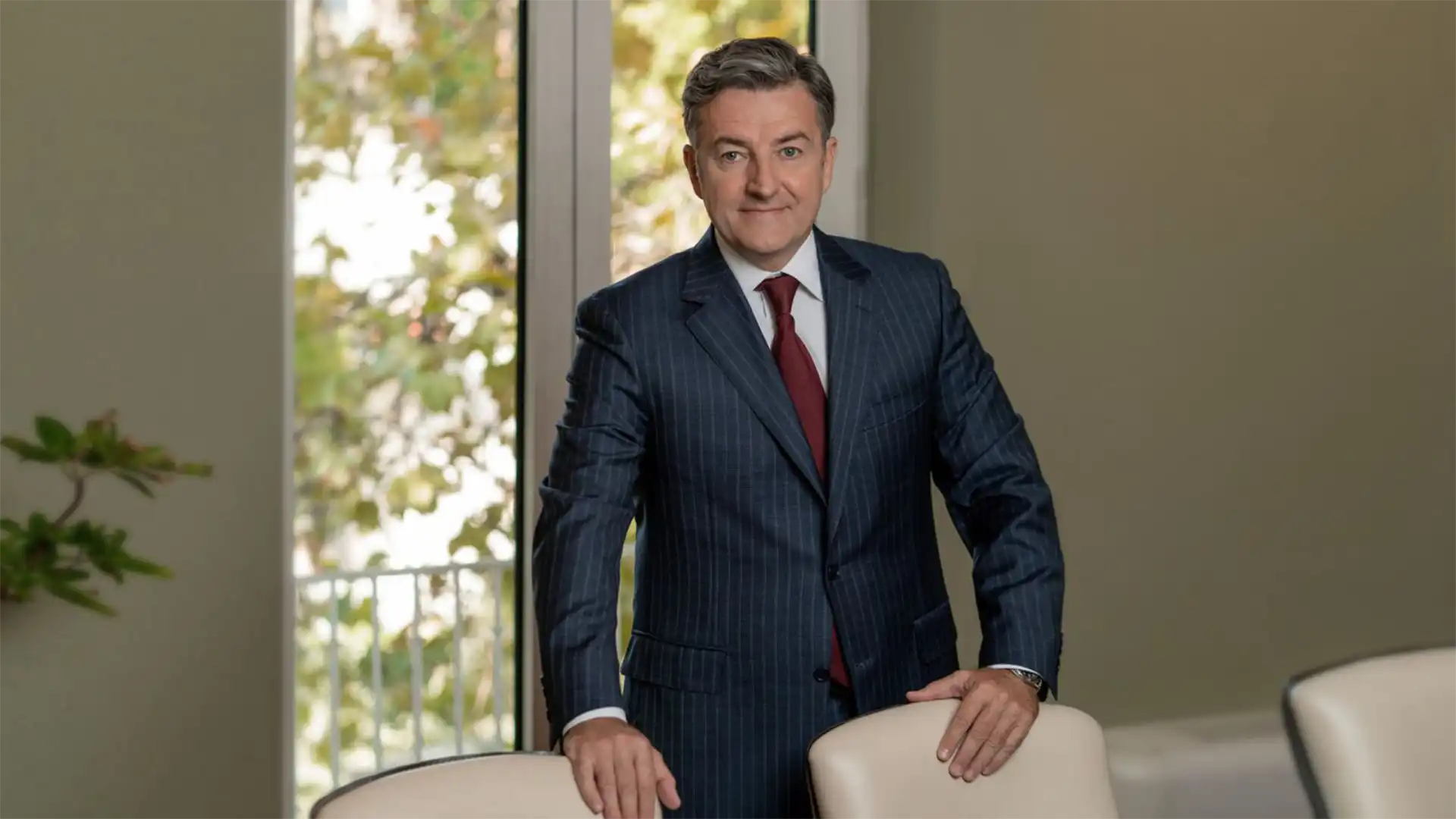
Adrem celebrates 30 years since its establishment. You are a model company, a family business. How do you assess the evolution of the company in these three decades, during which our country has transformed tremendously?
In the 30 years, I can say that we have developed at the same time as Romania. We have contributed to increasing energy efficiency, modernizing the national energy system and developing a vital industry, such as energy today.
I started in 1992 as a family business, founded by my brother Adrian Bodea, when I understood that the Romanian industry needs technological innovation. It was not easy, many periods with challenges, economic crises, pandemic, energy crisis and a conflict at our borders followed, but today I can say that we are in a moment of maturity, stability, with a positive impact on the energy industry.
Currently, the Adrem group consists of three companies, Adrem Invest, Adrem Engineering and Adrem Link, each specialized in its market segment. We have over 1,000 employees nationwide and we are the largest group of Romanian private energy services companies and the only one that collaborates with all the main energy distribution operators in the country.
What were the main lessons learned in the last two years, a period marked by the pandemic, the war in Ukraine and inflation?
The last two years have shown us some important things on a societal, business and personal level. They have given us the opportunity for introspection, which, although forced by circumstances, was necessary to understand what is really important to us. The fight against climate change, the transition to green energy and energy security are more important than ever, and as a society we have understood that we cannot do without each other, that it takes a common effort, solidarity and mutual help to overcome these shocks, especially now, in the midst of an energy crisis and with a conflict on our border.
What economic sectors do your customers come from? What other industries/fields have growth potential, in the sense that they will need your services?
Adrem’s customers come from several areas of the industry. We offer integrated energy infrastructure solutions, sustainable technologies and services for various companies in the energy and gas sectors. We also carry out energy efficiency projects for both the public and private sectors, and last but not least for end consumers.
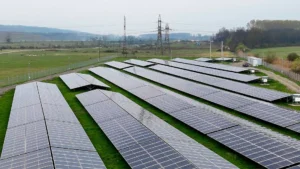
The areas aimed at the transition to green energy have great potential for growth, and this will be seen in the coming years, given the fact that we need to accelerate this process. Given the fight against climate change, we have developed our portfolio in order to meet the three major objectives: decarbonization, decentralization of energy production and digitalization of industry. At the moment, we have projects that meet these needs, such as: the installation of photovoltaic panels, smart metering, e-mobility projects, digitization of energy infrastructure and others.
How do you motivate your team? What skills do you emphasize when considering recruiting new employees or promoting employees?
Working with people motivates me the most and fuels me with energy and passion. Being a company with over 1,000 employees, it is difficult to physically reach each one, that’s why I made it a habit to talk to them monthly through digital platforms, to let them know that I am with them, and annually I organize meetings with all colleagues in the territory where we discuss situations at work, our projects and other things that they are curious or passionate about. I think it is important for both me and them to always be in touch, only in this way, a team can develop a lasting relationship, and this will also be reflected in performance.
And when we consider recruiting and promoting people, we emphasize values, passion, and ambition. These are the elements that unite us; I like to think that we are like a family where each member is an entrepreneur and makes their valuable and unique contribution to everything we implement together.
What are the biggest challenges in the field in which you operate?
The biggest challenge is the unpredictable environment in which we operate. For example, this year alone, the government issued five emergency ordinances on the energy market, aimed at regulating the market, but with some adverse effects for industry players.
Another challenge is the lack of specialists in the field, which is felt in most companies. We live in constantly changing times, to which we have to adapt as we go, to decide what is most important to us and where we want to go. Changing the mentality is perhaps the most difficult process, it requires time, involvement and authentic leadership that engages people’s energies.
How do you manage to make new partnerships/get new customers?
Our partnerships are based on the experience of 30 years on the local market, on the diversified offer of energy products and services customized to the needs of customers. We also have national coverage, in 18 counties, where we can provide the expertise and skills necessary for planning, developing and implementing turnkey solutions, both for individuals and legal entities.
Adrem is a member of the Family Business Network Romania Association. You had the opportunity to see the oldest family businesses in Europe and in the world. Unfortunately, the entrepreneurial spirit in Romania was demolished between 1945 and 1989. What effects did this phenomenon have on a balanced development of our society?
Family businesses create and sustain long-term values. That is why they are very important and create the resilience structure of our economy: the basis on which we build our daily lives. Unfortunately, in Romania, this structure is a bit fragile. The economic environment and the unpredictability offered by our state over time have brought the lifespan of businesses in Romania to a third, compared to those elsewhere, and I think these are the remnants of communism that we will hardly get rid of.
The family business I am part of was founded by my brother almost 30 years ago, when it seemed easier to become an entrepreneur, because there were many things to do. Businesses, in general, not family, have an average lifespan of 30 years, and in Romania only 7 years. I believe that 30 years, for our country, is quite a long period. That’s why, together with our family, Adrem, we want to take this average as high as possible, to exceed the global average and to pass on our values.
How do you see the evolution of entrepreneurship in our country, taking into account our current level and the level reached by the Central European states?
In the next period, at least in the next decade, I want to believe that entrepreneurship in Romania will reach a new level. I am glad to see that more and more start-ups grown on the concept of sustainability are emerging, also helped by the technological momentum, which will have an important impact on the business environment. Next, I believe that we need to cultivate and educate the entrepreneurial spirit from school, in order to reach the level of the Central European states, and also a friendly legislative framework that supports entrepreneurial initiatives.
I, personally, want and get involved as much as I can in the development of future entrepreneurs, offering from my experience so far.
What do you think the current Government should do to modernize the administration, reduce bureaucracy and stimulate the business environment?
What has been happening for too long in Romania is a lack of coherence, a lack of team, lack of leadership and vision. I believe that the current Government should find an authentic, involved and responsible leader in whom people believe, follow and see as a model. This leader must create a team with the same values as his, with the same objectives, which will come up with a concrete action plan at all levels. It’s hard, very difficult, but I believe that only in this way will we be able to establish a solid basis for the development of the business environment, including for encouraging entrepreneurship.
Since 2014 you have been president of the Romanian Energy Center, an association that represents the interests of companies in our country in relation to the European institutions in Brussels. How do you see the future of the energy system in Romania, taking into account the developments of recent years – Green Deal, PNRR, the exponential increase in utility prices, the announced investments in all sectors – production, distribution and transmission of electricity and natural gas?
I see the future of the energy system as a major challenge for all players in the industry because we need to accelerate the transition to green energy. This will bring high prices for energy products, which in turn will be a huge political challenge, but we need to be even more determined in terms of achieving this transition in order to achieve our 2050 targets.
In this context, the Green Deal represents a very good opportunity and is a suitable mechanism for the recovery of the European economy. And the PNRR is a support that comes at a time when we really need something like this. Romania has not invested enough in the last 30 years to modernize the energy infrastructure, to develop new production capacities and to increase the level of intelligence of this complex system – production, distribution, energy consumption. This lack of investment places us in a delicate situation because in order to be able to make use of European funds, we need to have serious projects.
Article taken www.clubantreprenor.ro