There are a lot of things to learn about photovoltaic panels and the clean energy that we can benefit from with their help. Starting with this article, we open the series of materials in which we will bring you more information about renewable energy sources, smart energy consumption, what it means to be a prosumer and, of course, about photovoltaic panels. We titled this series of articles “Green Romania” because we want to be as close as possible to you, to try to educate and build together a clean Romania for the future.
The first article in this series brings to the fore some basics about photovoltaic panels, how they work, what solar cells are and how they are produced.
What are photovoltaic panels? How do photovoltaic panels work?
General information
Photovoltaic (PV) means the conversion of light into electricity using semiconductor materials that exhibit the photovoltaic effect, a phenomenon studied in physics, photochemistry, and electrochemistry.
The photovoltaic panel is the generator with which the energy within the photovoltaic system is manufactured .
Solar photovoltaic energy is the energy produced by solar photovoltaic cells, which convert sunlight directly into electricity.
PV has become the cheapest source of electricity in regions with high solar potential. Panel prices have fallen by 10% over the course of ten years. In this case, competitiveness is beneficial and paves the way for the global transition to sustainable energy and the reduction of global warming.
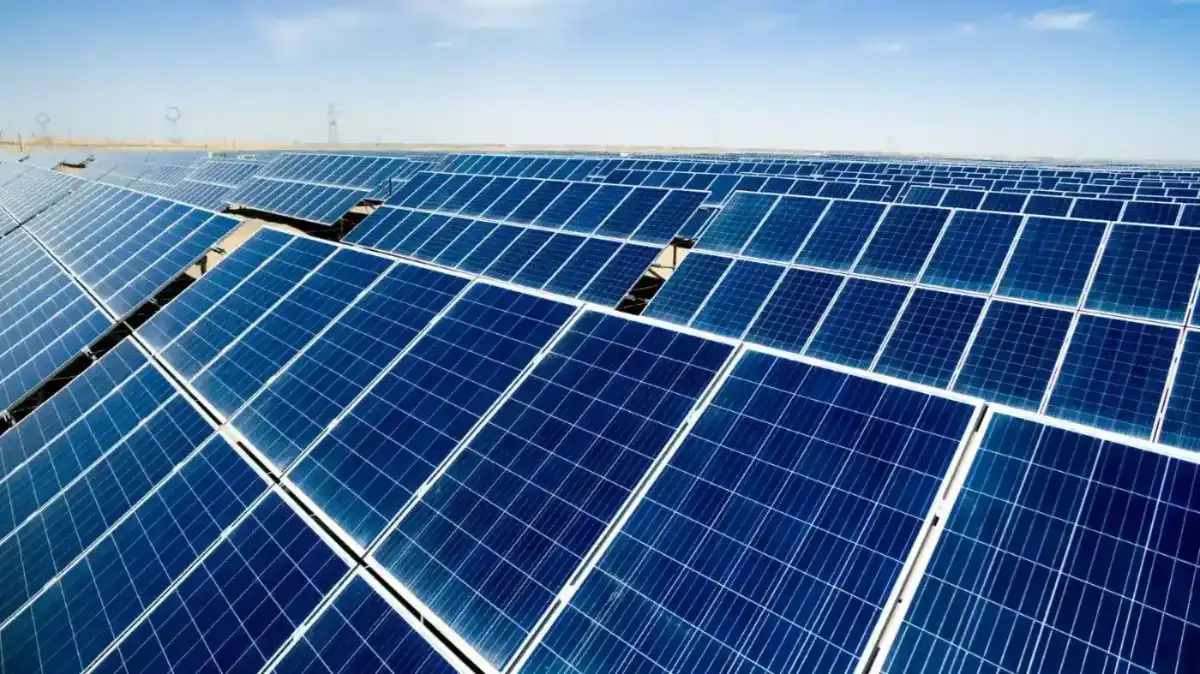
A photovoltaic system uses solar modules, each comprising a number of solar cells, which generate electricity.
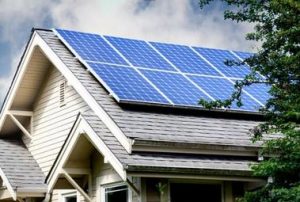
Photovoltaic systems can be mounted on the ground, on the roof, on the wall or floating. The mount can be fixed or a solar tracker can be used to track the sun in the sky.
Solar PV systems have specific advantages as an energy source: once installed, their operation does not generate pollution or greenhouse gas emissions, they show simple scalability in terms of energy needs, and silicon has a high availability in the earth’s crust.
Photovoltaic systems have long been used in specialized applications, such as stand-alone installations, and grid-connected photovoltaic systems have been used since the 1990s. Photovoltaic modules were first mass-produced in 2000, when German environmentalists and the Eurosolar organization secured government funding for a ten-thousand-rooftop program.
As technology has advanced, the production process has improved, and thus the cost has decreased, the reliability has increased, and so has the efficiency of photovoltaic installations. Metering incentives and financial incentives such as preferential feed-in tariffs for solar-generated electricity have supported solar PV installations in many countries. More than 100 countries now use solar energy.
After hydropower and wind power, PV is the third largest source of renewable energy in terms of global capacity. The International Energy Agency expects growth of 700 – 880 GW from 2019 to 2024.
In 2018, installed photovoltaic capacity worldwide increased to more than 515 gigawatts (GW), covering about two percent of global electricity demand.
Solar cells used in photovoltaic panels
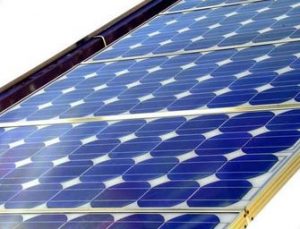
Solar cells generate electricity directly using sunlight.
The photovoltaic system is best known as a method of generating electricity by using solar cells to convert energy from the sun into a flow of electrons through the photovoltaic effect.
Solar cells produce direct current electricity from sunlight, which can be used to power equipment or recharge a battery.
The first practical application of photovoltaics
The first practical application of photovoltaics was to orbit satellites and other spacecraft, but today most photovoltaic modules are used for grid-connected systems for electricity generation. In this case, an inverter is required to convert direct current into alternating current.
There are other, smaller markets for stand-alone, remotely controlled systems for homes, boats, recreational vehicles, electric cars, roadside emergency phones, remote sensing and cathodic pipeline protection.
Photovoltaic power generation uses solar modules composed of a number of solar cells that contain a semiconductor material. Copper solar cables connect modules (module cable), arrays (array cables), and subfields. Due to the growing demand for renewable energy sources, the production of solar cells and photovoltaic arrays has advanced considerably in recent years.
Solar photovoltaic power generation has long been seen as a clean energy technology that relies on the planet’s most abundant and distributed renewable energy source – the sun. The cells require environmental protection and are usually packed tightly into solar modules.
The PV module power is measured under standard test conditions (STC) in “Wp”. The actual power in a given location may be lower or higher than this nominal value, depending on geographic location, time of day, weather conditions, and other factors. PV grid capacity factors are typically below 25%, which is lower than many other industrial electricity sources.
Types of photovoltaic systems
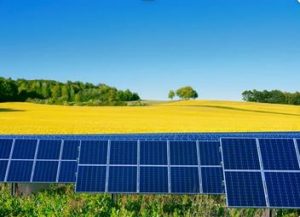
Mobile terrestrial photovoltaic systems – For the best performance, terrestrial photovoltaic systems aim to maximize the time they are exposed to the sun. This is achieved with the help of solar tracking systems, by moving the photovoltaic modules according to its position in the sky. The increase in exposure of photovoltaic panels can be up to 20% in winter and up to 50% in summer.
Mounted static photovoltaic systems can be optimized by analyzing the solar path. Photovoltaic modules are often set to latitude tilt, an angle equal to latitude, but performance can be improved by adjusting the angle for summer or winter. In general, as with other semiconductor devices, temperatures above room temperature reduce the performance of photovoltaic modules.
Vertical photovoltaic systems
A number of solar modules can also be mounted vertically from each other in a tower, if the distance from the Sun’s zenith is greater than zero, and the tower can be rotated horizontally as a whole and each additional module around a horizontal axis. In such a tower, the modules can follow the Sun exactly. Such a device can be described as a ladder mounted on a rotating disk. Each step of that ladder is the middle axis of a rectangular solar panel. If the Sun’s zenith distance reaches zero, the “ladder” can be rotated north or south to avoid a solar module that casts a shadow on a lower one. Instead of an exact vertical tower, a tower with an axis pointing toward the North Star can be chosen, which means that it is parallel to the Earth’s axis of rotation. In this case, the angle between the axis and the Sun is always greater than 66 degrees.
During a day it is only necessary to rotate the panels around this axis to follow the Sun. The installations can be mounted on the ground (and sometimes integrated with agriculture and grazing) or embedded on the roof or walls of a building (photovoltaic integrated into the building).
How are photovoltaic panels produced?
In general, the manufacturing process of solar PV is simple, in that it does not require many complex or moving parts. Due to the solid nature of PV systems, they often have relatively long lifespans, between 10 and 30 years. To increase the electrical power of a PV system, the manufacturer must simply add more PV components. With the increase in production, economies of scale are achieved that lead to lower costs, which is to the advantage of both the manufacturer and the end beneficiary.
Stages of manufacturing silicon photovoltaic systems
The manufacture of silicon photovoltaic systems has several stages. First, polysilicon is processed from mined quartz until it is very pure (semiconductor grade). This is melted when small amounts of boron, a group III element, are added to make a p-type semiconductor rich in electron holes. Usually using a seed crystal, an ingot of this solution is grown from liquid polycrystalline. The ingot can also be molded into a mold. The plates of this semiconductor material are cut from the bulk material with a wire saw, then go through surface etching before being cleaned. Then, they are placed in a phosphorus vapor deposition furnace, which puts a very thin layer of phosphorus, a group V element, which creates an n-type semiconductor surface. To reduce energy losses, an anti-reflective layer is added to the surface, along with the electrical contacts. After the cell is terminated, the cells are connected by electrical circuit according to the specific application and ready for transport and installation.
Crystalline silicon photovoltaics are a type of photovoltaic system, and although they represent the majority of solar cells currently produced, there are many new and promising technologies that have the potential to be amplified to meet future energy needs. As of 2018, silicon crystalline cell technology serves as the basis for several types of PV modules, including monocrystalline, multicrystalline, mono PERC, and bifacial.
Thin-film photovoltaics
Another newer technology, thin-film PV, is manufactured by depositing semiconductor layers on the substrate in a vacuum. The substrate is often made of glass or stainless steel, and these semiconductor layers are made from several types of materials, including cadmium tellide (CdTe), copper diselenide (CIS), indium copper diselenide (CIGS), and amorphous silicon (a-Si). After being deposited on the substrate, the semiconductor layers are separated and connected by electrical circuits by laser writing. Thin-film photovoltaics now make up about 20% of total photovoltaic production due to reduced material requirements and costs for manufacturing thin-film modules, compared to silicon-based wafers.
Other emerging photovoltaic technologies include organic, paint-sensitized, quantum, and perovskite photovoltaics. OPVs fall into the thin-film category of manufacturing and typically operate around the 12% efficiency range, which is less than the 12–21% typically seen by silicon-based PVs. Because organic PV requires very high purity and is relatively reactive, they must be encapsulated, which greatly increases the cost of manufacturing and means that they are not feasible on a large scale. Dye-sensitized PVs are similar in efficiency to OPVs, but are significantly easier to manufacture. However, these dye-sensitized PVs have storage problems because the liquid electrolyte is toxic and can penetrate the plastic potential used into the cell. Quantum dot solar cells are point-sensitized DSSCs and are solution-processed, which means they are potentially scalable but currently have an efficiency level of 12%. Perovskite solar cells are a highly efficient solar energy converter and have excellent optoelectric properties for photovoltaic purposes, but are expensive and difficult to manufacture.
Source: wikipedia.org